Reactive Cinematics Engine
Build playable cinematic worlds with nodes, connectors, routes, timing windows, outcomes, choices, QTEs, and state gates.
 VIBE STUDIO
Creator beta now opening
VibeStudio is an AI-native game engine for Reactive Cinematics — playable worlds built from generated clips, branching paths, UI, audio, state, and runtime logic. It also gives AI image and video creators the missing context layer for coherent sequences, films, anime, visual novels, comics, and worldbuilding workflows.
Sign in with Google to open the creator beta. VibeStudio does not store passwords.
Untitled Project • Saved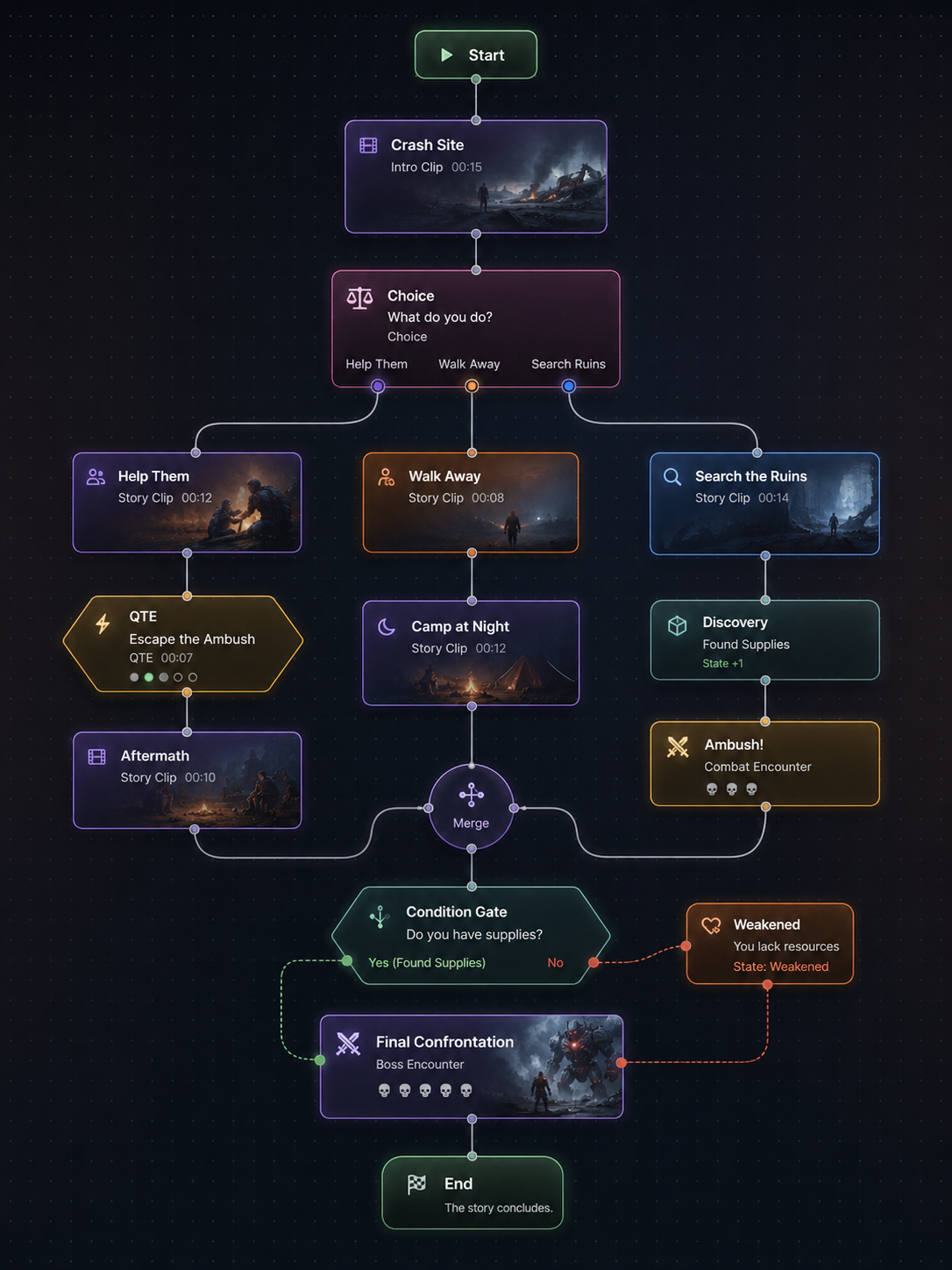
Build playable cinematic worlds with nodes, connectors, routes, timing windows, outcomes, choices, QTEs, and state gates.
Manage how images and clips connect: scene intent, references, character state, style rules, pathing, and continuity notes.
Add interface layers, music, ambience, prompts, input windows, variables, and runtime feedback without building a traditional game stack.
Back up local projects, export runtime builds, publish shareable beta links, and prepare for future UpNext distribution.
Reactive Cinematics
Reactive Cinematics turn generated clips, choices, routes, timing windows, UI, audio, and state into playable experiences. It is not a traditional real-time simulation engine — it is a graph-native engine for cinematic worlds that respond to the player.
Why this matters →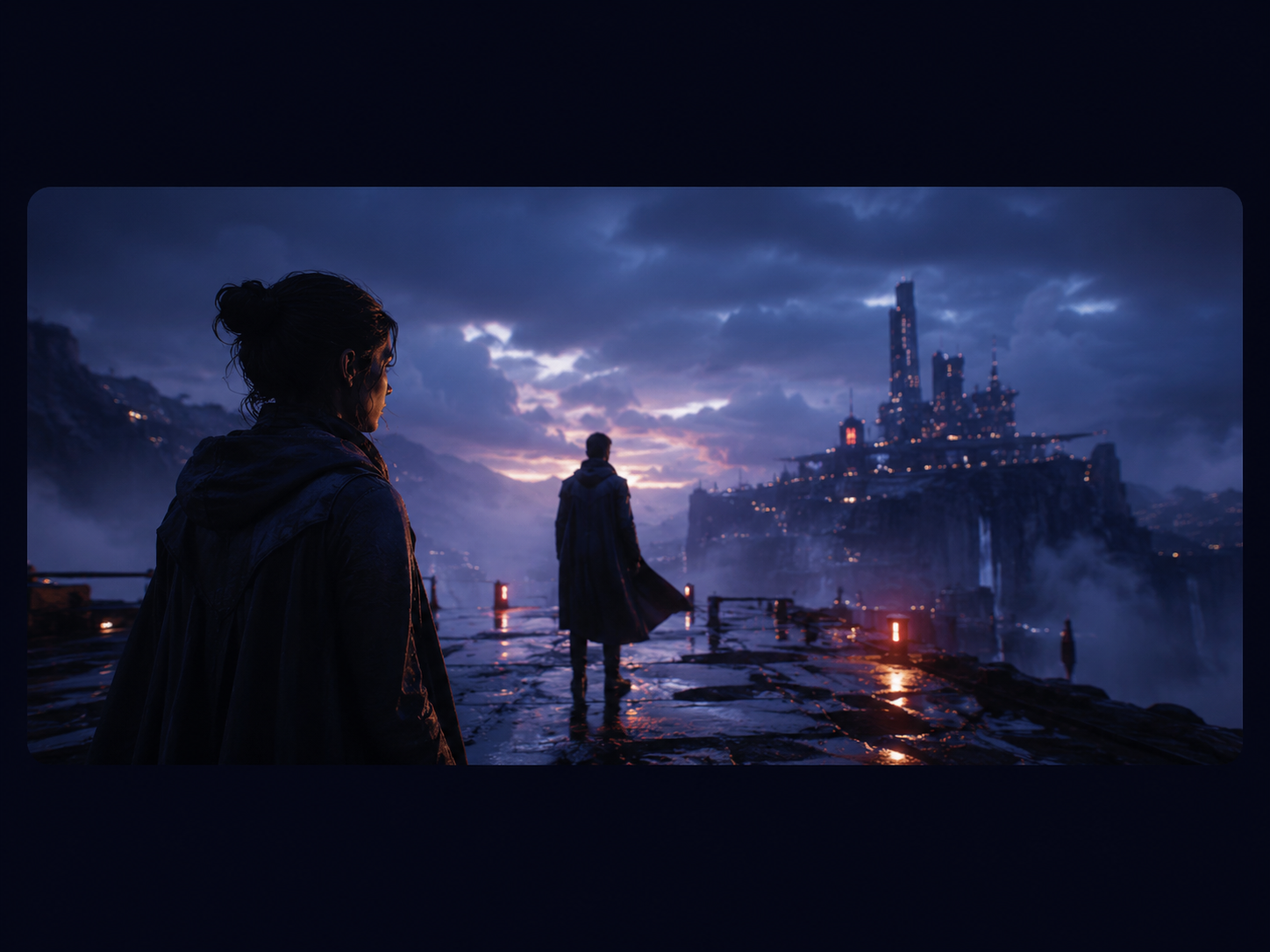 Reactive CinematicsClips become playable worlds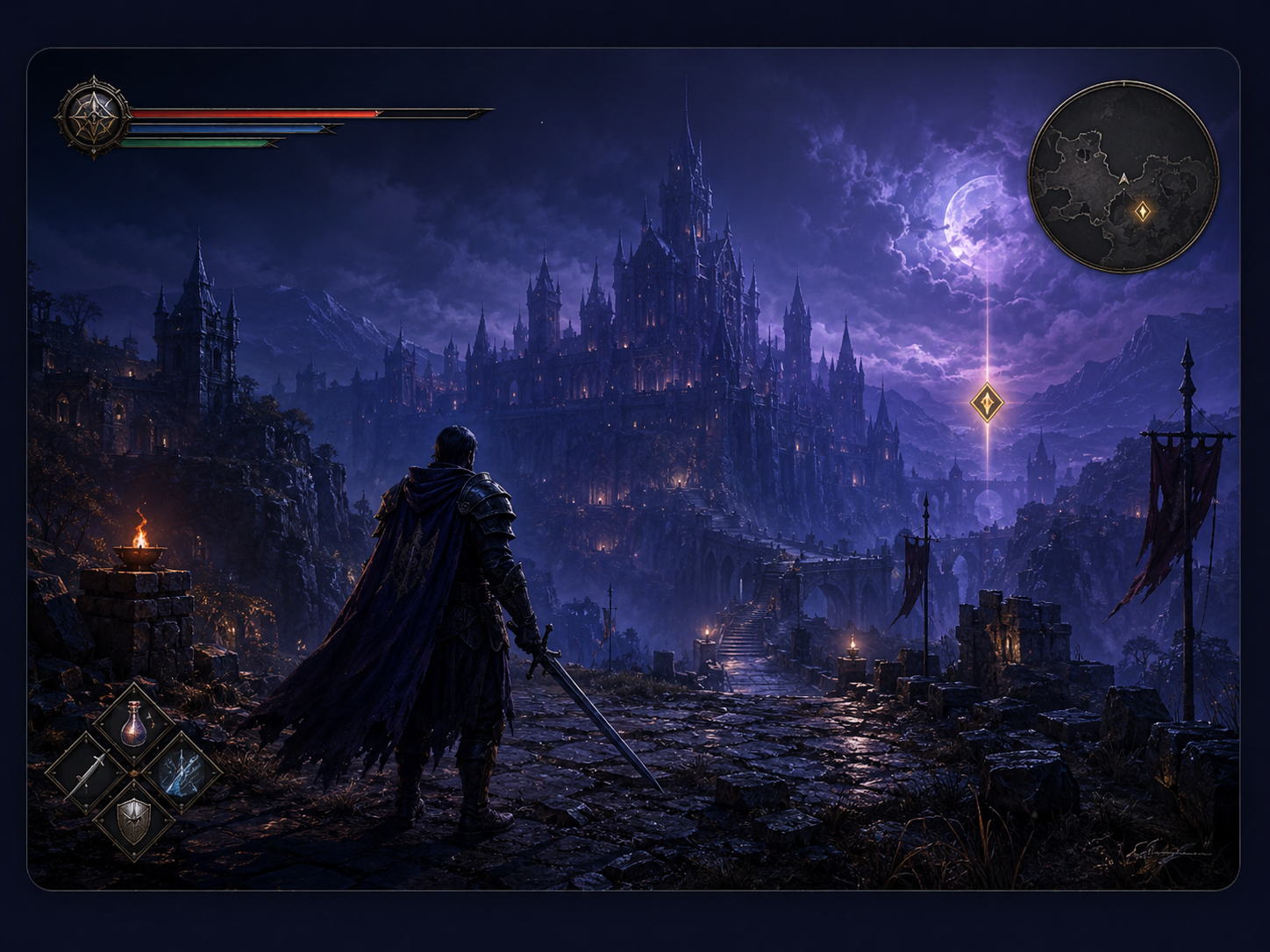
AI media context layer
VibeStudio is not just another place to type prompts or upload reference images. Modern generators already accept character references, style images, first frames, last frames, and other inputs. VibeStudio builds the supporting environment around those inputs so creators can maintain context across scenes, clips, branches, revisions, and playable logic.
That makes generation faster, cheaper, and less wasteful because the creator is not manually rebuilding the same context every time a shot, branch, transition, or reference pack changes.
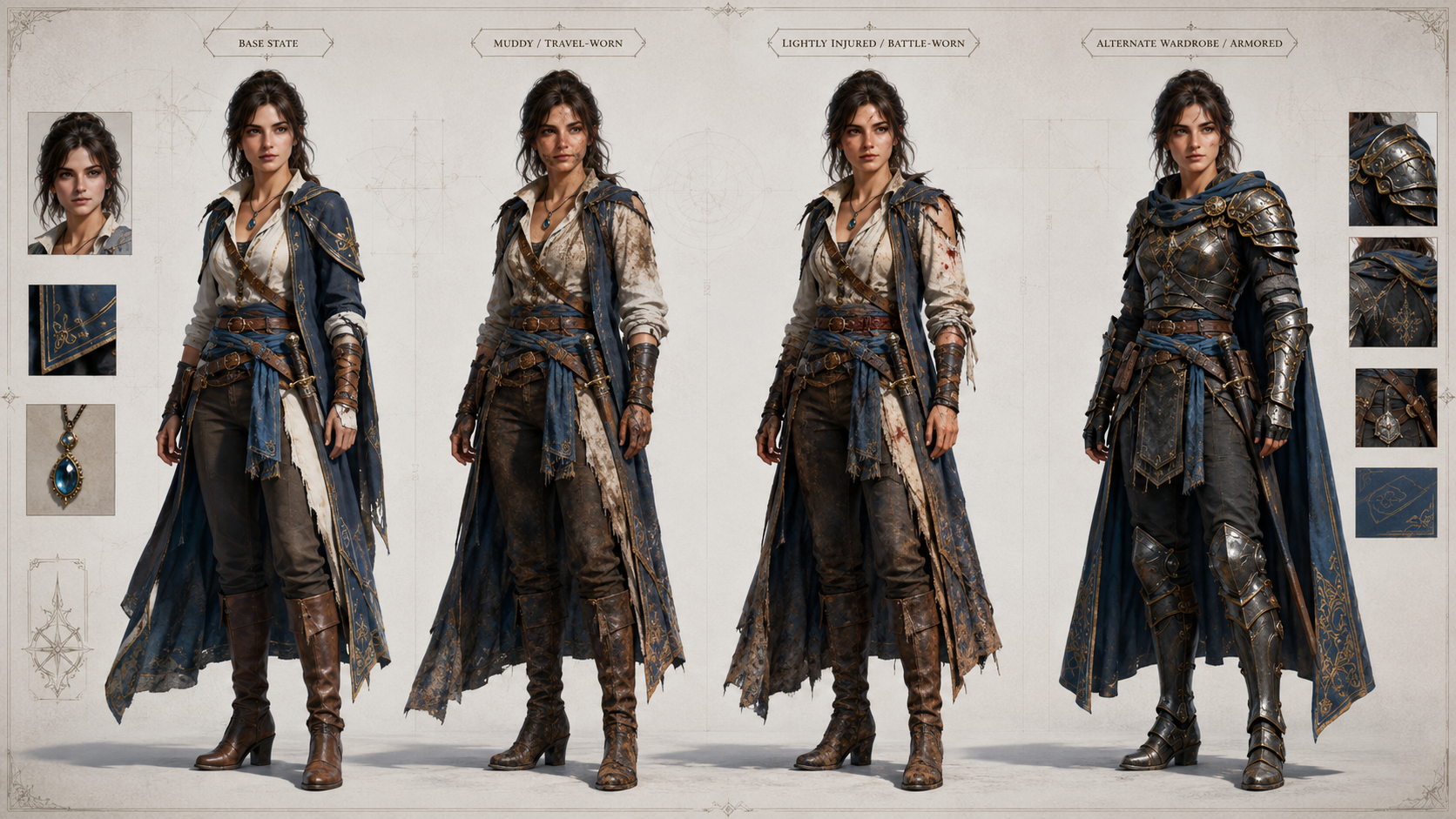
Track wardrobe, injuries, mud, damage, emotion, inventory, location, faction, and scene history alongside normal character reference sheets.
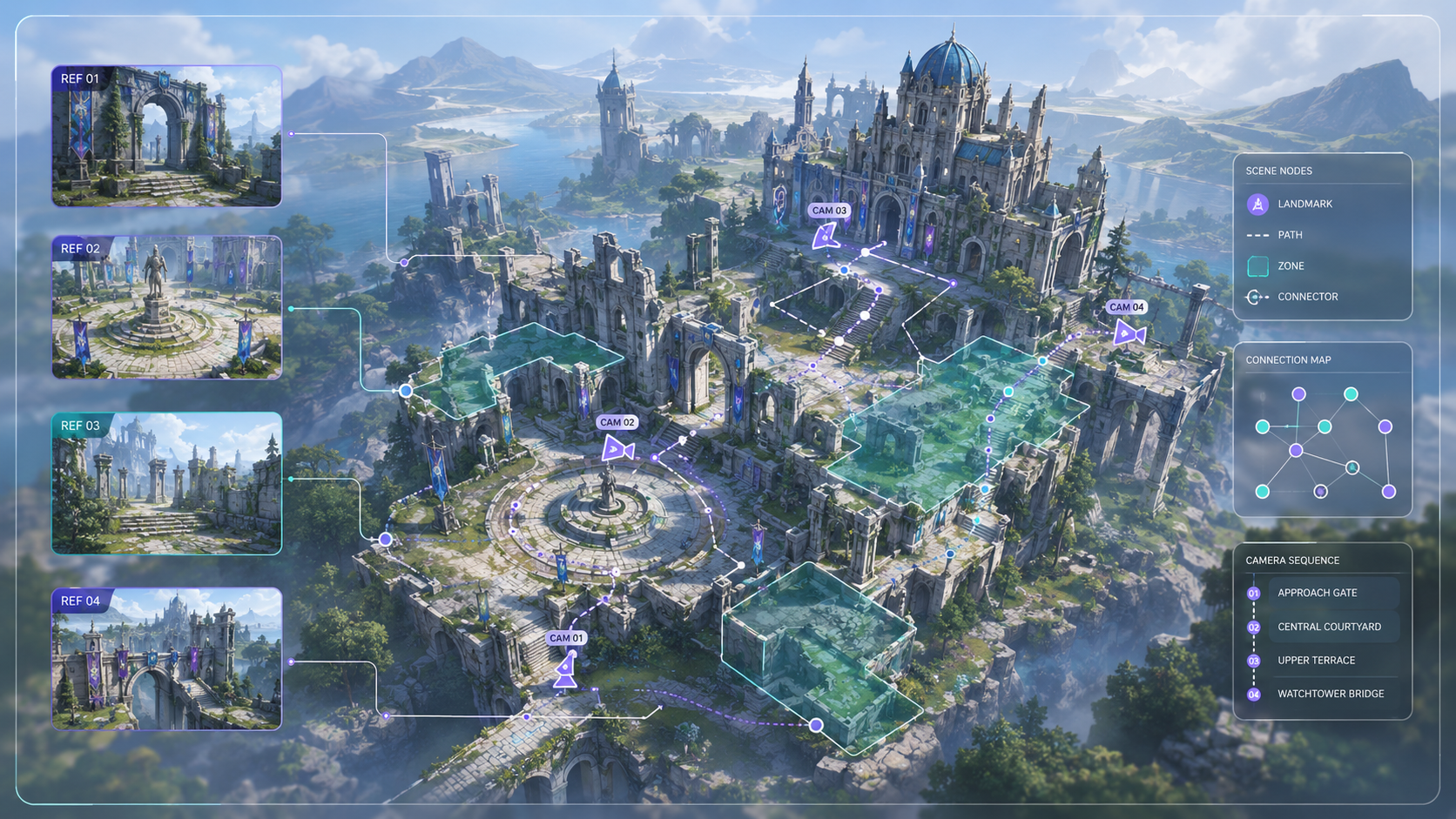
Keep places, props, routes, camera intent, node context, and style decisions connected across the wider project.
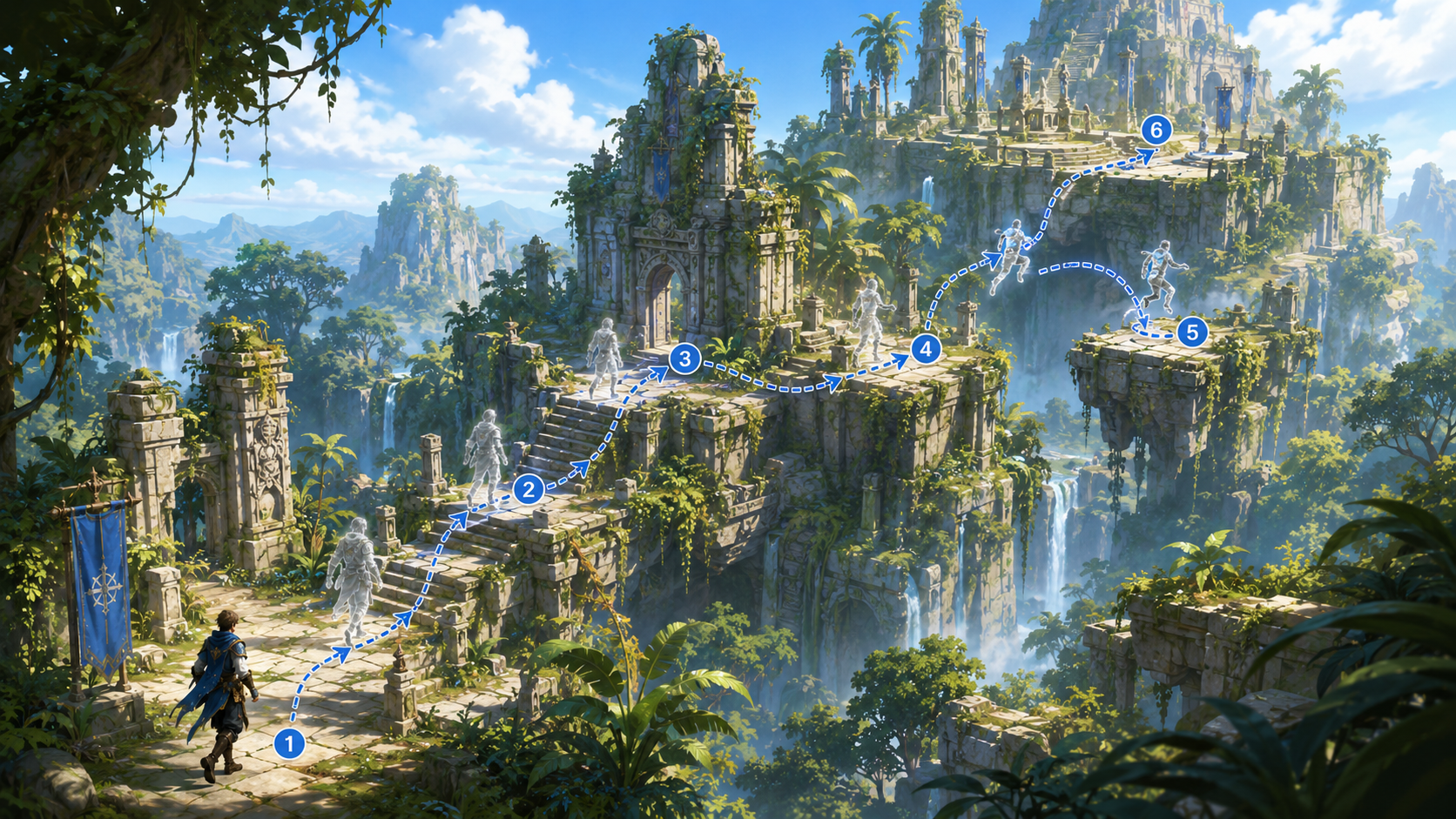
Create clearer intermediary references that show how a character should move through a space, not just what they look like in one frame.
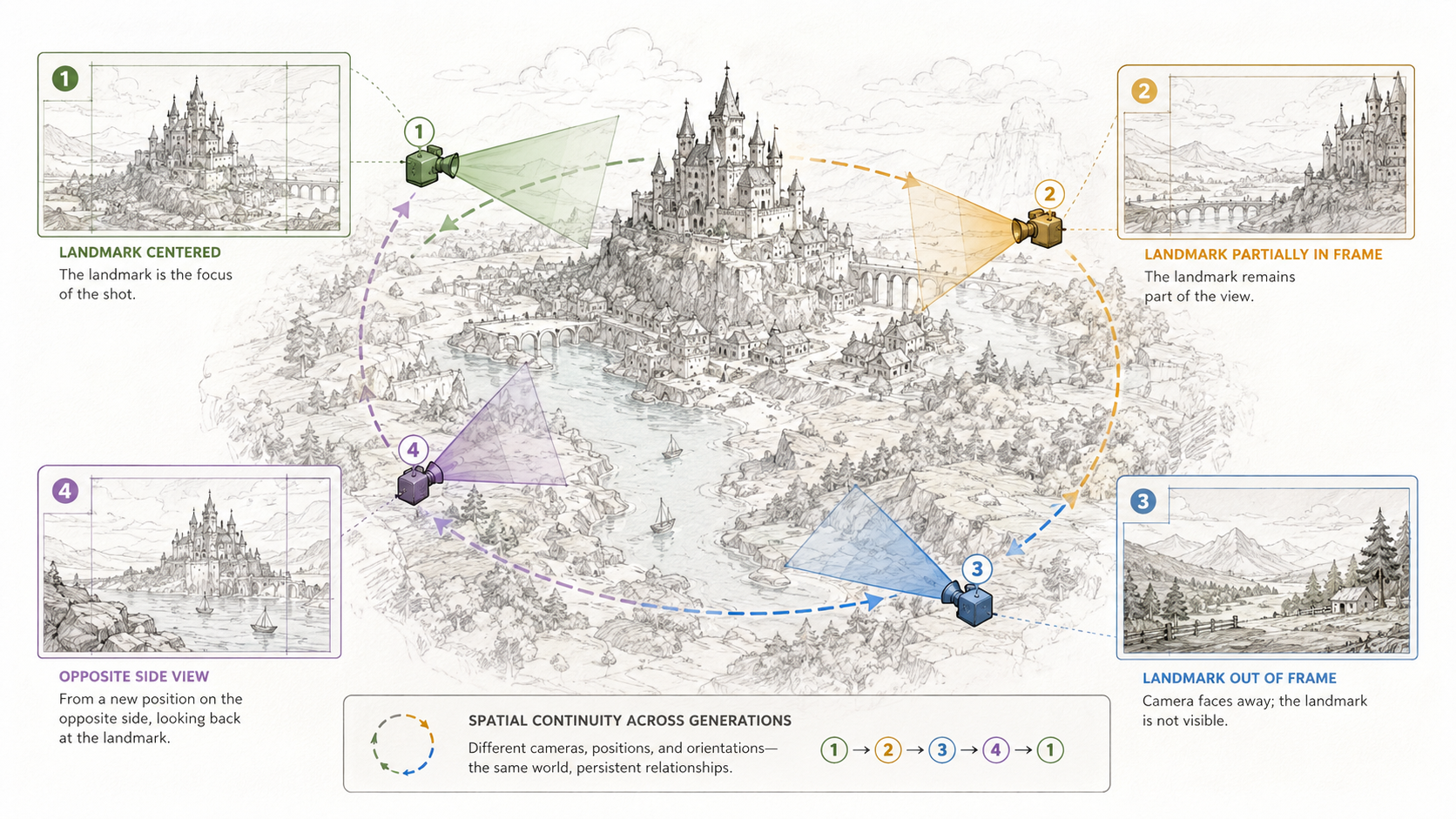
Use graph structure, reference history, and runtime state to improve first-frame and last-frame work instead of treating every clip as a fresh chore.
Why it matters
Reactive Cinematics does not make games cheaper by giving up visual fidelity. It changes the cost curve by spending on authored playable moments, generated media, state, and routes instead of simulating every possible inch of a world.
Small graphs can feel like interactive stories. Dense graphs can support traversal, hiding spots, grapple targets, puzzles, combat windows, routes, and outcomes that feel much closer to traditional AAA freedom.
Cost per playable minute
A headline budget only tells part of the story. A short campaign with a huge budget can cost more per player-facing minute than a much larger open-world game. VibeStudio gives teams a different production dial: choose how dense the graph needs to be, then spend intentionally on story, media, mechanics, branches, and playable moments.
Traditional pipeline pressure
The more revealing breakdown is cost per player-facing minute. Publicly discussed budgets, reported runtimes, rumors, and analyst estimates point to a hard truth: the shorter the campaign, the harsher the cost-per-minute story becomes.
Reactive Cinematics model
These are illustrative planning ranges for media generation and iteration, not fixed promises. Real costs depend on model choice, acceptance ratio, quality target, branching density, review process, and production workflow.
Scenario model
These examples use publicly reported, leaked, rumored, or analyst-estimated budgets paired with estimated player-facing runtimes. The goal is not to claim audited accounting. It is to show how dramatically the cost picture can change when the same runtime is authored as Reactive Cinematics instead of a traditional simulation-heavy game.
~840 playable minutes · reported / rumored budget basis
~1,071 playable minutes · reported budget basis
~2,996 playable minutes · analyst-estimated budget basis
~1,563 playable minutes · reported / estimated budget basis
Boundary: this is a format comparison, not a claim that VibeStudio rebuilds every simulation-heavy AAA system for these prices. It shows how a player-facing runtime can target radically different budgets when you author cinematic freedom instead of simulating every square metre.
Spatial memory · coming by the end of beta
AI tools can already accept prompts, character sheets, style images, first frames, and last frames. Spatial Sketch adds the missing spatial layer around those inputs: where places are, how routes connect, where cameras look, where characters move, and how shots relate across the project.
Creators repeatedly restate locations, character positions, movement, camera intent, and continuity by hand.
Rooms, forests, paths, props, cameras, character state, and graph context stay connected as reusable production memory.
One engine. Many production targets.
VibeStudio is strongest when media needs continuity: characters moving between shots, scenes branching into outcomes, styles staying consistent, and audiences engaging with AI content instead of only watching it.
Create graph-driven cinematic games with routes, QTEs, dialogue, state, UI, audio, traversal, endings, and publishable runtime builds.
Organize scene continuity, character state, style references, alternate cuts, branch points, and production notes around the media you generate.
Use VibeStudio to create stronger shot context, spatial references, character-state packs, and consistent media sequences even before publishing a game.
Use Reactive Cinematics as a primary format, or as a hybrid layer for cutscenes, NPCs, scripted traversal, training, and stakeholder demos.
Honest boundary: Reactive Cinematics is not the right primary pipeline when micro-movement, twitch aim, systemic physics, battle royale scale, or large real-time multiplayer presence is the core game. For those projects, it can still reduce cost as a hybrid cinematic, storytelling, dialogue, training, or previs layer.
Use cases
VibeStudio is for creators who need generated media to stay connected. Use it to build playable games and interactive films, or to manage richer context for image sets, video sequences, anime episodes, visual novels, comics, training, brand worlds, prototypes, and formats that do not have a clean old-media label yet.
Indie developers
Author routes, traversal, choices, QTEs, inventory moments, state gates, dialogue, and endings as a playable graph. Spend your budget on scenes the player actually experiences.
AI image and video creators
Use VibeStudio to manage the supporting environment around your generations: scene structure, spatial notes, character state, style rules, reference sets, pathing, first frames, last frames, and sequence continuity.
Film, anime and series creators
Keep cinematic direction, pacing, and emotion, then add moments where viewers choose a path, time an action, reveal a memory, explore a branch, or unlock alternate scenes.
Comics, webtoons, novels and fiction
Reactive Cinematics fits longer creative cycles: chapters, side stories, hidden routes, relationship state, character choices, patron updates, and community-backed expansions.
Studios & production teams
Use Reactive Cinematics as the primary format for authored single-player experiences, or as a hybrid layer for dialogue, cutscenes, NPC moments, scripted traversal, and training scenes.
Brands, learning & communities
Make product stories, community events, learning paths, safety training, sales demos, music experiences, and creator-branded worlds with measurable player progress.
UpNext creator economy
VibeStudio is the creation tool. UpNext is the distribution layer launching after beta: creator profiles, follow/wishlist, supporter tiers, game purchases, premium access, ad-supported slices, and community-funded ad-free windows.
The goal is simple: help creators fund longer visual story cycles without depending only on forced ads or massive algorithmic reach.
Beta workflow
Transparent beta pricing
VibeStudio is free while we test the editor, runtime, publishing, storage, and direct-link delivery pipeline. These Studio quotas are for creation, development, private testing, and creator-managed share links.
UpNext distribution is separate from Studio quotas. Studio plans fund the toolchain, direct hosted testing links, release storage, analytics, and future game services; UpNext will handle its own access and revenue model.
No surprise charges during beta. Paid plans, PAYG overages, and optional AI generation credits will be announced clearly before any billing is enabled.
Plans cover the toolchain: VibeStudio access, runtime licensing, direct hosted testing links, versioned releases, analytics, and future game services. UpNext distribution is the separate creator-economy channel where games can earn.
Prototype, test, and share limited direct links while you learn the workflow.
Create real public releases, test with early audiences, and prepare for UpNext earnings.
More versions, larger games, bigger tests, and stronger creator-economy tooling.
Large games, heavier retained media, and bigger creator launches.
For teams that want to deploy outside our hosted ecosystem while retaining platform options.
Join creators shaping Reactive Cinematic games, interactive films, AI video sequences, visual novels, comics, anime, and new playable worlds.
VibeStudio beta
We are checking whether new creator onboarding is currently open.